Swap privately.
Across any chain.
Cross-chain exchange routed through multiple hops. Breaks the on-chain link between sender and receiver. Powered by HoudiniSwap.
- No wallet connection
- Non-custodial
- Est. 15–45 min
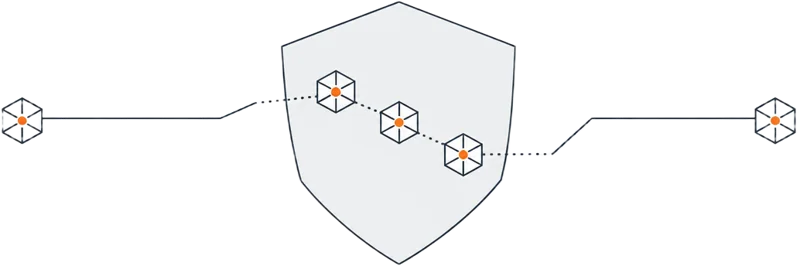
Exchange partners screen deposits for AML and sanctions risk and may require identity verification. Details
Choose tokens and an amount to see private routes.
Quotes refresh every 30 seconds. The final amount can move slightly with the market while your swap runs.
- waiting for deposit
- confirming
- exchanging
- anonymizing
- finished
Arcanum.Finance does not hold deposits. Funds pass through HoudiniSwap’s exchange partners during execution.
Private routing separates the public sending and receiving trail. Partner records remain legally auditable.
No Arcanum.Finance sign-up or wallet connection. AML screening and provider compliance requirements still apply.
Learn
Why financial privacy
Public receipts, real identities and the case for everyday financial privacy.
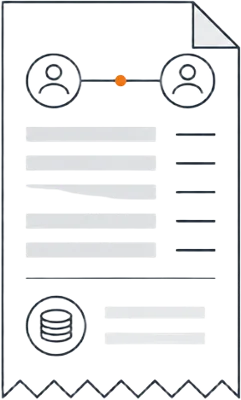
Public ledger · a lasting receipt

Privacy · less public exposure
A permanent public receipt
Most blockchains permanently record sender and receiver addresses, amount and time. That history is public—not just visible to the people involved.
An address can become an identity
KYC checks at exchanges can connect an address to a real person. Once linked, their on-chain history can become a record of their financial activity.
Visibility has consequences
Public balances and transactions can enable surveillance and targeted attacks. Having every payment open to scrutiny also limits financial autonomy.
Privacy is an everyday expectation
Paying with cash does not publish your balance or payment history. Digital value should offer that same ordinary privacy—not only in extreme situations.
Separate the public trail
Private multi-hop routes are one practical way to break the direct on-chain link between source and destination. They do not erase partner records or remove compliance requirements.

Learn
Monero (XMR) vs. Bitcoin (BTC) & Co.
The difference, privacy mechanics, wallets, glossary and history.
Monero (XMR) vs. Bitcoin (BTC) & Co.
Digital cash. Sender, receiver and amount hidden by default - not because you're hiding anything, but because every other chain is a permanent receipt with your name on it.
Same activity. Wildly different privacy.
Monero is cash, but digital — private by default.
Sender, receiver and amount are hidden by default — not because you're hiding anything, but because every other chain is a permanent receipt with your name on it.
Every Bitcoin transaction is a risk, a potential breadcrumb left behind for some bureaucrat, blockchain analyst or criminal to follow. Monero flips the script, letting your financial data disappear when you need it to. That is why private routes run through it.
- Ledger:
- public — but only that something moved, never the details
- Amounts:
- hidden (RingCT)
- Sender:
- one of 16 possible signers — unknowable
- Receiver:
- brand-new stealth address every time
- Emission:
- tail @ ~0.6 XMR/block, forever
- Next:
- FCMP++ — anonymity set ≈ entire chain
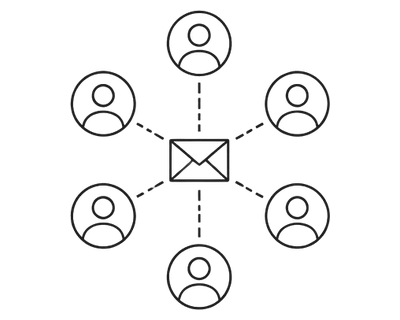
Hides who sent it. A crowd of decoys: watchers see that someone in the group paid — they never learn which one.
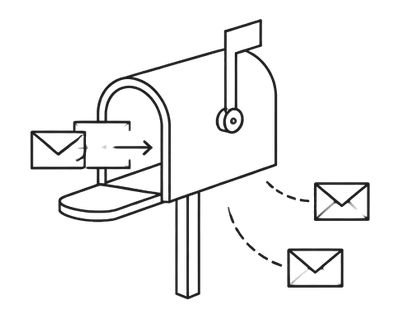
Hides who got it. A fresh mailbox: every payment lands in a brand-new one-time address only the recipient can open. Nobody, not even the sender, can link your payments together.
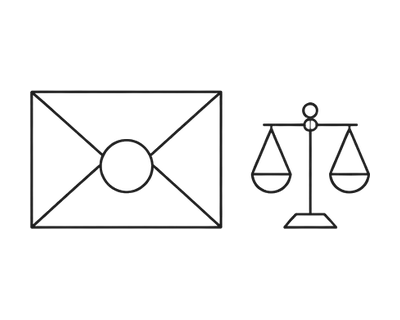
Hides how much moved. A sealed envelope: anyone can see an envelope was passed; nobody reads what's inside — while the math still proves nothing was minted.
Your decoys today: 15 strangers. After FCMP++: every output that ever existed. The crowd becomes the chain itself.
Bitcoin is a receipt. Forever.
Imagine every coffee, every donation, every gift you ever paid for was tattooed on your forehead. That's how every public chain works. Every BTC transaction broadcasts sender, receiver, amount, timestamp and originating IP to a public, append-only ledger. Add KYC at the on-ramp and you have a global, retroactively searchable financial dossier.
Anyone scrapes every transaction, forever. No statute of limitations on a CSV file.
Exchanges hand your wallet ↔ ID mapping to anyone with a subpoena or budget.
Chainalysis & friends cluster wallets and sell scoring to states and banks.
| Feature | Bitcoin | Monero |
|---|---|---|
| Sender visible? | Yes | Hidden |
| Receiver visible? | Yes | Hidden |
| Amount visible? | Yes | Hidden |
| Every coin equal? (fungible) | No — coins can be 'tainted' | Yes, always |
| Need KYC to buy? | Usually yes | Plenty of no-KYC paths |
| Block time | ~10 min | ~2 min |
| ASIC mining? | Yes — only big farms | RandomX — your CPU works |
Bottom line: imagine getting a receipt tattooed on your forehead every time you buy coffee. That's Bitcoin.
The protocol is bulletproof. Your habits aren't.
Monero protects your money. You have to protect your phone, your passwords, and your mouth.
- Use Tor or a no-logs VPN
- Run your own node
- Write the seed on paper, not in the cloud
- Churn before large or sensitive spends
- Don't post your wallet address publicly
- Cold storage for savings, hot wallet for spending
- Encrypt your devices (LUKS / FileVault / VeraCrypt)
- Don't tell people how much you hold
The 25-word rule. Your seed is 25 words. Write it on paper or steel. Never type it into a phone, email, cloud doc, or screenshot. Seed = money.
Send to yourself 1–3 times before a big spend. Walk through a crowd before meeting someone.
Don't churn back-to-back. Spread it over hours or days.
Break large sums into varied chunks.
Don't undo on-chain privacy with network leaks.
- Banks freeze accounts for political reasons.
- Chain analysis firms sell your data to anyone with a budget.
- CBDCs put a programmable kill-switch on every dollar.
- Across borders, currencies and regimes, XMR just… works.
It's not about hiding bad things. It's about not letting governments, banks, or random analysts decide whose money is allowed today.
A wallet. A backup. Your first XMR.
A Monero wallet is needed when receiving XMR—not just because your private route includes a Monero hop.
- 01
Pick a wallet
Receiving XMR? Choose a Monero wallet such as Monerujo for Android or Feather for desktop. For other assets, use a wallet that supports your selected token and network.
- 02
Back it up safely
Follow your wallet’s backup instructions. Keep its recovery phrase offline and private. Never share it with a swap service or support agent.
- 03
Start small
Copy your wallet’s receiving address into the swap form and check the token and network. Try a small swap within the quoted limits, then confirm it arrived in your wallet.
Before you deposit
- Check the receiving address, asset, network and any required memo.
- Send the exact deposit amount before the order expires.
- Keep the order ID and your deposit transaction hash for tracking.
- Allow an estimated 15–45 minutes; confirmations and provider checks can take longer.
The vocabulary, in one place.
Not a wiki hole — just enough to keep reading.
- XMR
- Ticker symbol for Monero, the native currency of the Monero blockchain.
- Ring signature
- A signature produced by one of many possible signers. The verifier learns the group signed — not which member.
- Stealth address
- A one-time destination address derived per transaction, so no two payments to the same recipient share an on-chain address.
- RingCT
- Ring Confidential Transactions. Hides the amount of each transaction while still proving no coins were minted.
- FCMP++
- Full-Chain Membership Proofs. Upcoming upgrade replacing the 16-decoy ring with a proof over the entire set of Monero outputs.
- Bulletproof
- A compact zero-knowledge range proof used inside RingCT to show hidden amounts are non-negative.
- Churning
- Sending XMR to yourself across several transactions to break heuristic linkage before spending.
- Node
- A computer running the Monero daemon. Your wallet talks to a node to broadcast transactions and read the chain.
- KYC
- Know-Your-Customer. The identity paperwork centralised exchanges demand before letting you buy or sell.
- Seed
- 25 words that back up your entire wallet. Anyone with them owns the coins — guard them like cash.
- Atomic swap
- Trustless cross-chain trade (e.g. BTC ↔ XMR) that either completes on both sides or refunds both.
- Tail emission
- The permanent ~0.6 XMR/block reward that keeps miners paid after the main issuance ends.
Born in 2014. No premine, no CEO, no boardroom.
Built by cypherpunks who wanted real digital cash. Just code and a community.
- 2014Launch
Forked from Bytecoin as BitMonero, then renamed. No premine, no ICO, no founder allocation.
- 2016Adoption
AlphaBay adds XMR. Real-world demand for default privacy gets very real.
- 2017RingCT
Mandatory. Transaction amounts hidden for every user, every time.
- 2022Tail emission
Main emission ends; ~0.6 XMR per-block tail kicks in so miners are always paid.
- soonFCMP++
Full-Chain Membership Proofs replace 16-decoy rings. Anonymity set jumps to ~100M+.